
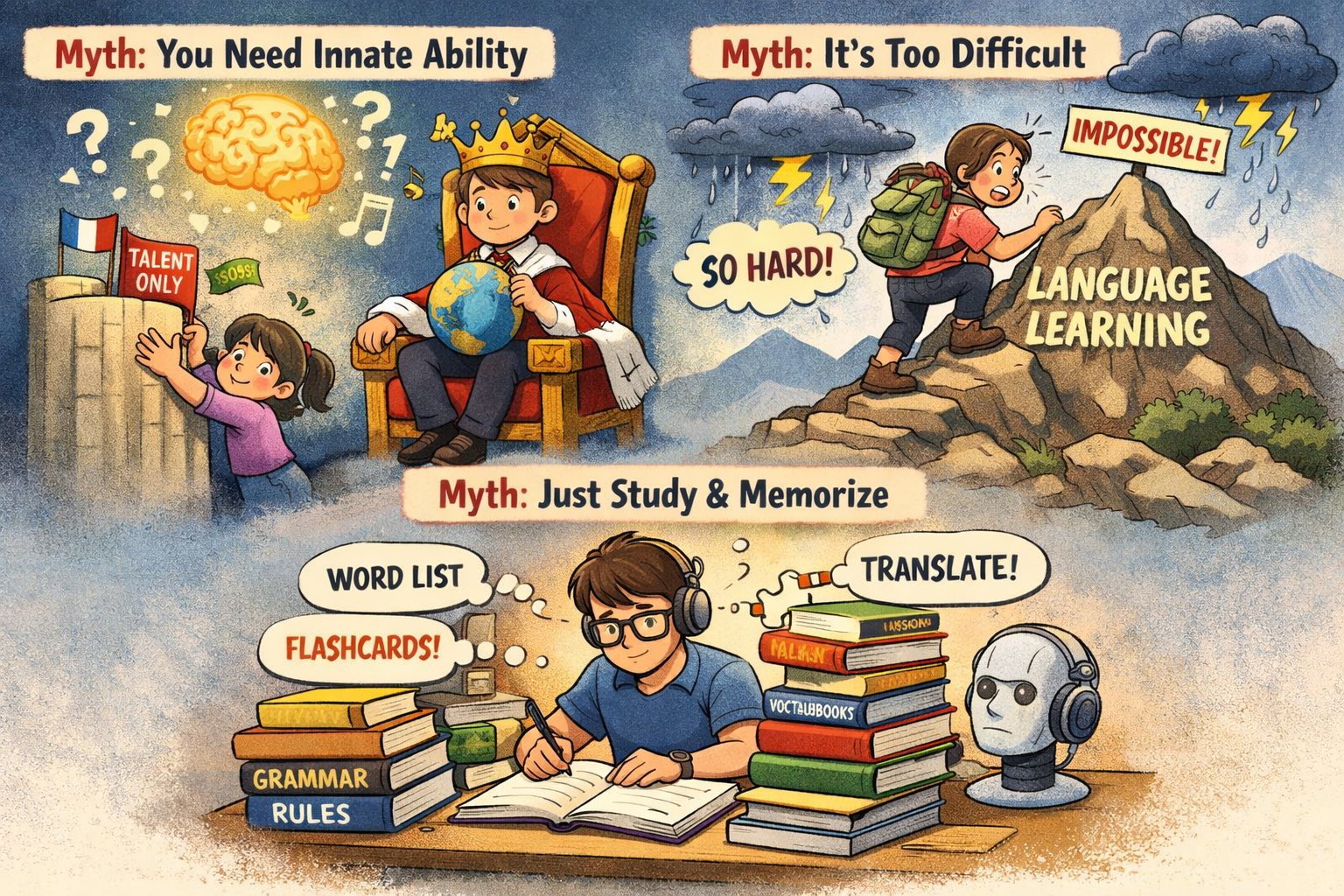
Learning a language as an adult requires effort, but perhaps not the kind of effort you think:
- “I can learn Danish by studying hard.”
Not quite. Studying grammar books or written texts will mostly give you passive knowledge of the language. It won’t teach you how to actually use it. Learning a language is more like learning a sport or learning to drive a car: it’s action-based. It’s doing rather than studying, practice rather than theory. - “Danish is among the world’s most difficult languages to learn.” Well… Difficulty depends on many individual factors. Some general ones include your first language, age, motivation, natural ability, and environment, the people you interact with in daily life. Speakers of Swedish, Norwegian, German, or Dutch, which are closely related to Danish, typically progress faster. Younger learners also tend to acquire languages more quickly. Motivation, your personal “why?” – may be the single most important factor for success. Natural abilities, such as hearing sounds accurately and remembering words, and the opportunities you have to use Danish in everyday life, also play a role.
- “I don’t need to learn Danish because all Danes speak English.” That depends on your goal. While many Danes will say they speak English, both proficiency and willingness to use it extensively can vary. More importantly, truly succeeding in life in Denmark and navigating the culture makes learning Danish hard to avoid. Cultures are expressed through their languages, and in Denmark that usually means Danish for most of the population – without dismissing the many other languages spoken in the country, including Turkish and Arabic.